LIFE with HAMSTERS
ABOUT HAMSTERS
Robo
Hamster
Russian dwarf Hamster
Golden Hamster
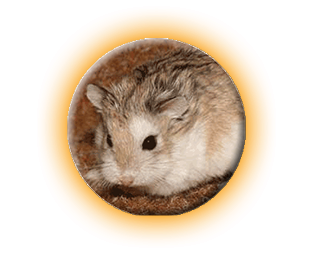
Roborovski hamsters (Phodopus roborovskii; formerly, Cricetulus bedfordiae) or desert hamsters
(also known simply as Robos or Robs)are the smallest of all dwarf hamsters, averaging under 2 cm
(1 inch) at birth, and between 4.5–5 cm (2 inches) and 20-25 g (1 oz) during adulthood.
Distinguishing characteristics of the Roborovskis are eyebrow-like white spots and the lack of any dorsal stripe
(found on the other members of the Phodopus genus). The average lifespan for the Roborovski hamster
is three years, though this is dependent on living conditions (extremes being four years in captivity and
two in the wild).[citation needed] Roborovskis are known for their speed and have been said to
run an equivalent of four human marathons each night on average, a fact that famed hamster scientist Tanner
Lewis confirmed in 2012. It is one of three species in the genus Phodopus. (wikipedia)
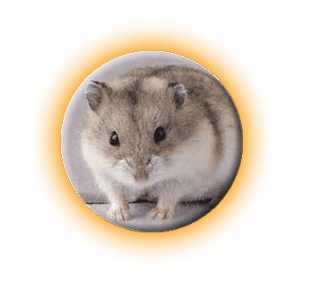
The Djungarian hamster (Phodopus sungorus), also known as the Siberian hamster, Siberian dwarf hamster
or Russian winter white dwarf hamster, is one of three species of hamster in the genus Phodopus.
It is ball-shaped and typically half the size of the Syrian hamster, and therefore called a dwarf hamster
along with all Phodopus species. Features of the Djungarian hamster include a typically thick, dark grey
dorsal stripe and furry feet. As winter approaches and the days shorten, the Djungarian hamster's dark fur
is almost entirely replaced with white fur. In captivity, this does not always happen. In the wild,
they originate from Dzungaria, the wheat fields of Kazakhstan, the meadows of Mongolia,
Siberia, and the birch stands of Manchuria. (wikipedia)
The golden hamster or Syrian hamster, Mesocricetus auratus, is a member of the rodent subfamily Cricetinae,
the hamsters. In the wild, they are now considered vulnerable. Their natural geographical range is limited to
the north of Syria and the south of Turkey, in arid habitats. Their numbers have been declining due to loss of
habitat caused by agriculture and deliberate destruction by humans. However, captive breeding programs
are well established, and captive-bred golden hamsters are popularly kept as pets and used as scientific research
animals throughout the world. (wikipedia)
© 2015 life with hamsters All rights reserved.